The Institute for War Crimes (IKKL), in cooperation with the Ministry of Education, Science, Technology and Innovation, organized today the second “Zá n’Kujtëse” Forum, which was dedicated to one of the most serious and least enlightened chapters of Kosovo’s history, the mass poisoning of thousands of Albanian students during the years 1990/1992.
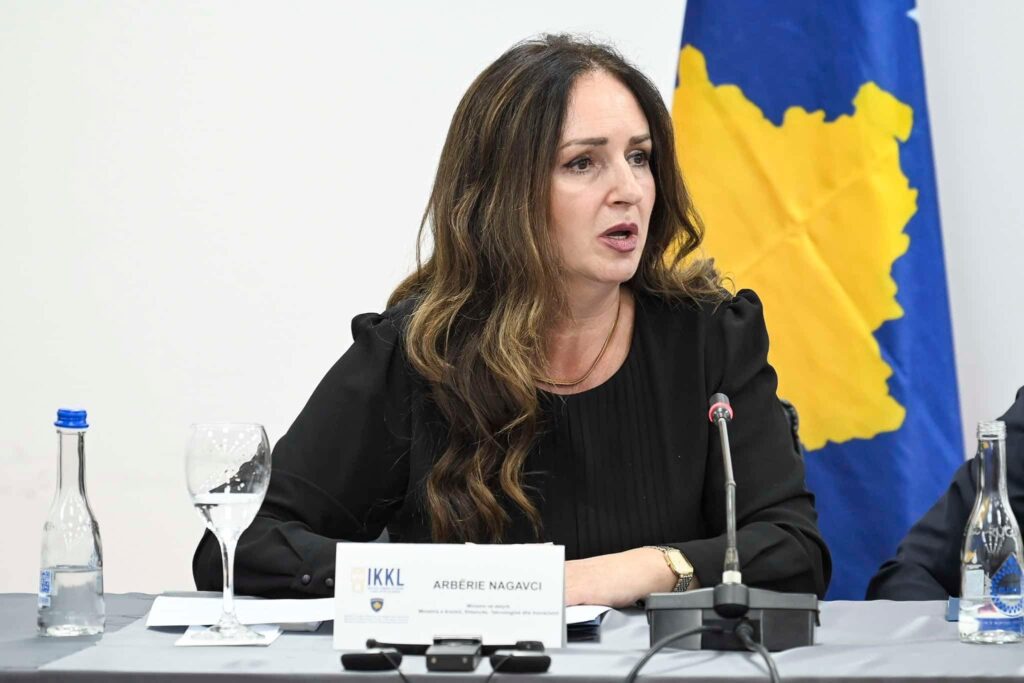
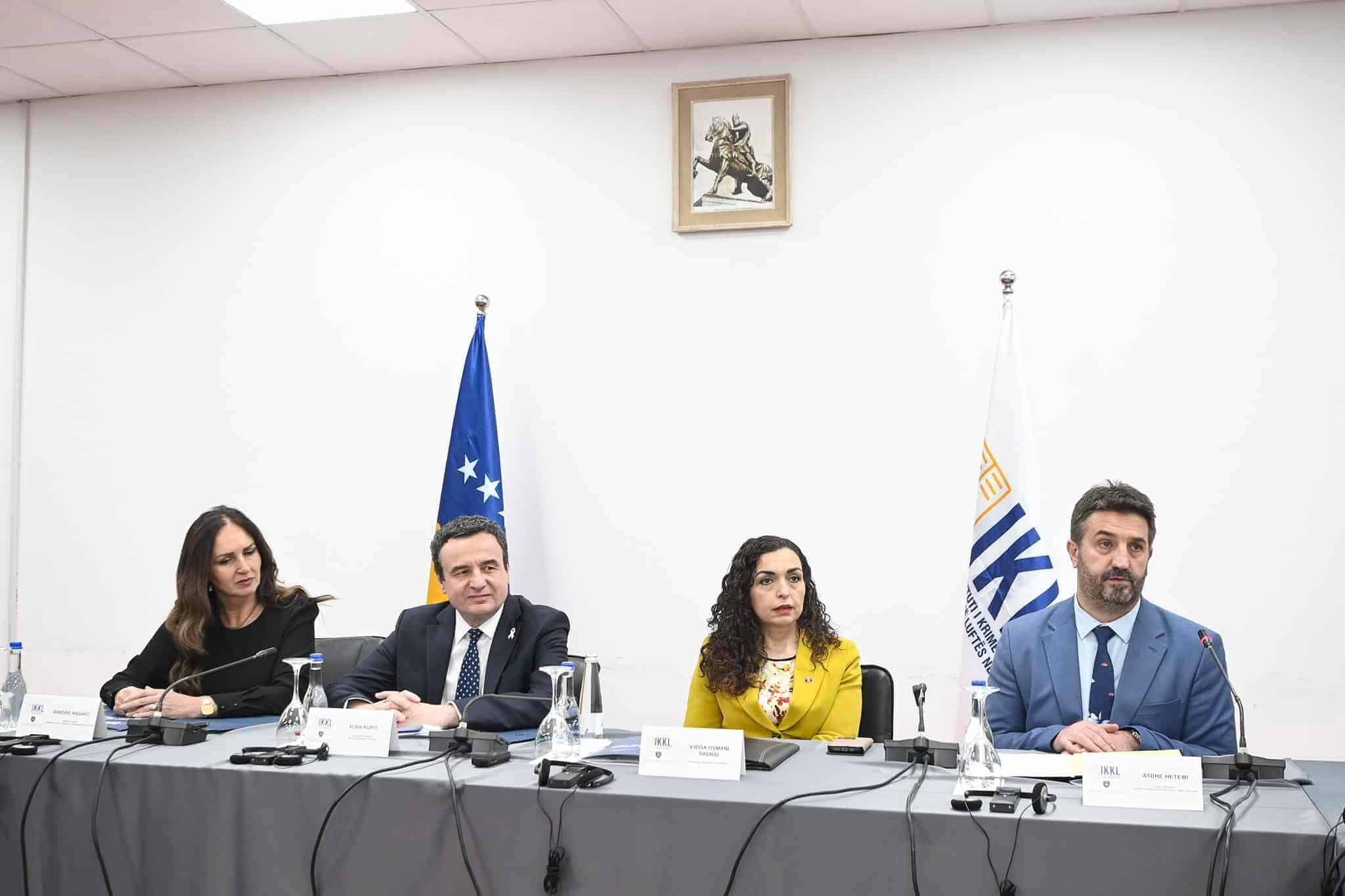
The event was attended by the President of the Republic of Kosovo, Vjosa Osmani-Sadriu, the acting Prime Minister, Albin Kurti, and the acting Minister of Education, Science, Technology and Innovation, Arbërie Nagavci, who assessed the necessity of documenting, addressing and institutionally caring for this serious event of the ’90s.
President Vjosa Osmani-Sadriu stressed that this painful event proved the use of military chemical substances against Albanian students, carrying out a chemical attack on the children of Kosovo.
She stressed that these poisonings were part of a wider scheme of Serbian crimes that culminated in the crimes of 1998/1999, pledging that institutions will continue to work to document, address and seek justice for this chapter of pain and resistance.
Acting Prime Minister Albin Kurti, in his speech, emphasized that today we are united to recall one of the most macabre and diabolical crimes that remain vivid in the collective memory.
Kurti recalled that the first cases of poisoning were identified in the “Luigj Gurakuqi” Gymnasium in Klina, to later spread to 20 cities and 11 villages in Kosovo, as well as to factories, kindergartens and other institutions, bringing the number of those poisoned to over 7 thousand students.
Acting Minister of Education, Arbërie Nagavci, emphasized that the history of the Albanian people, built on resilience, is equally marked by the pain and systematic violence exerted against Kosovo Albanians. She recalled that the mass poisoning of over 7 thousand students remains one of the most serious events, when minor children ended up lying in school corridors, with difficulty breathing, dizziness and loss of consciousness.
“While our doctors documented real clinical cases, Serbian institutions denied any poisoning, called the students ‘simulators’ and exercised repression on Albanian doctors, teachers and institutions”, emphasized Nagavci.
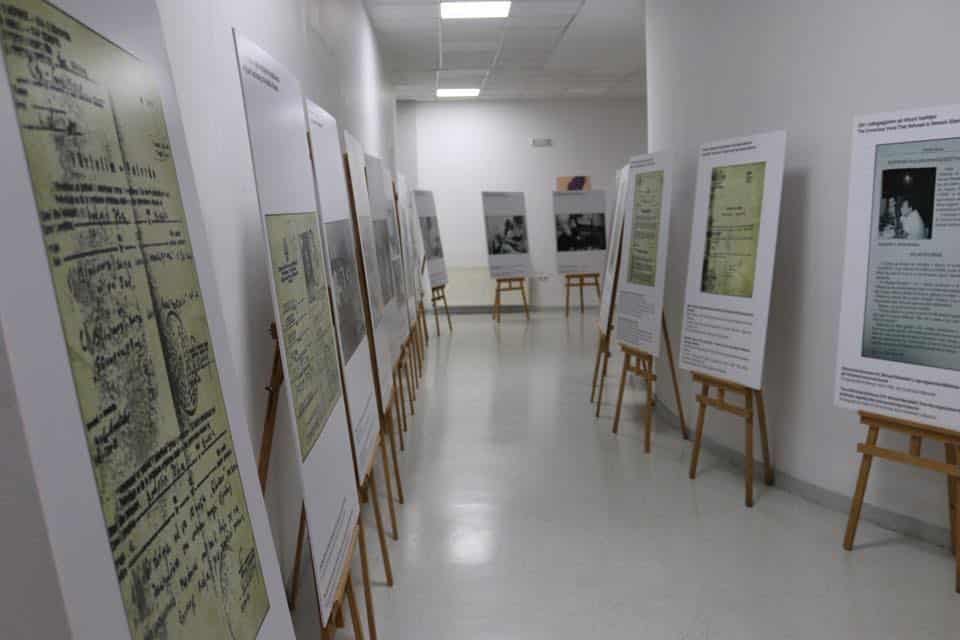
The Director of the IKKL, Atdhe Hetemi, stated that this forum aims to preserve and transmit historical truth through photographs, archival documents and testimonies of the time, creating a necessary space for memory, reflection and social awareness.
A special testimony was shared by Shqipe Gashi, one of the poisoned students of that time and today an official of MASHTI. She said that talking about that period remains a difficult and burdensome experience. Gashi recalled May 1990, the time when she was a high school graduate with dreams of continuing her studies, attending afternoon classes at the Shkollë e Normale building. “I remember the moment I fainted in the yard,” she emphasized, adding that this condition had recurred several times, experiences that have left indelible marks on her life.